



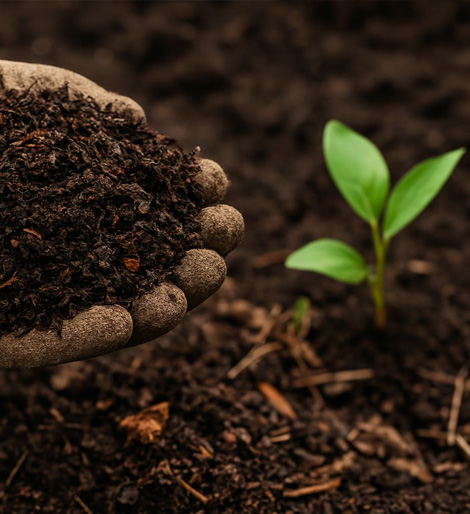
Organic Compost:
A Natural Solution for Healthier Soil and Sustainable Gardening.
What is Organic Compost?
Organic compost is a nutrient-rich, natural soil amendment made from decomposed plant and animal matter. It is created through the composting process, where organic waste—such as food scraps, leaves, and manure—breaks down into a dark, crumbly material packed with essential nutrients. Unlike chemical fertilizers, organic compost improves soil health naturally, enhancing plant growth without harming the environment.
Benefits of Using Organic Compost
Enriches Soil & Boosts Plant Growth
Organic compost is loaded with essential nutrients like nitrogen, phosphorus, and potassium. It enhances soil structure, providing plants with better access to water and air, which leads to stronger roots and healthier crops.
Improves Moisture Retention & Drainage
Compost helps soil retain moisture while also preventing waterlogging. This is especially beneficial in dry climates, as it reduces the need for frequent watering and promotes sustainable gardening.
Environmentally Friendly & Reduces Waste
By composting organic materials, we reduce landfill waste and lower greenhouse gas emissions. Instead of throwing away food scraps and yard waste, composting recycles nutrients back into the soil, creating a closed-loop, sustainable ecosystem.
Encourages Beneficial Microorganisms
Organic compost supports a thriving ecosystem of microbes, earthworms, and fungi that break down nutrients, making them more accessible to plants. These microorganisms also help suppress soil-borne diseases, leading to healthier crops.
Chemical-Free & Safe for the Environment
Unlike synthetic fertilizers, which may contain harmful chemicals, organic compost improves soil fertility without toxic runoff. It promotes natural pest resistance and reduces dependence on chemical inputs, making it ideal for organic farming and eco-friendly gardening.

Regenerative Agriculture
Detailed Insights
Regenerative Organic Agriculture Basics
This approach goes beyond organic farming by aiming to regenerate ecosystems, often involving practices like cover cropping, crop rotation, and minimal tillage. These methods can enhance soil structure, which is crucial for groundnut growth.
Groundnut’s Role:
As a legume, groundnut contributes to soil health by fixing nitrogen, reducing the need for synthetic fertilizers, and improving soil organic matter, aligning with regenerative goals.
Practical Applications
Sustainable groundnut farming practices, such as organic amendments and crop rotation, overlap with regenerative agriculture, potentially increasing yields and soil resilience.
Our Organic Compost Innovations
At Onefarm, our commitment to Regenerative Organic Agriculture goes beyond cultivation. We produce high-quality organic compost solutions that transform natural waste into nutrient-rich resources—fueling healthier soils and more productive crops.
Our organic solutions include:
- Vermicompost: Harnessing the natural power of earthworms, our vermicompost is rich in beneficial microbes and offers a balanced nutrient profile that enhances soil fertility.
- Green Compost: Derived from locally sourced plant residues and crop byproducts, our green compost improves soil structure, boosts fertility, and increases water retention.
- Compost Tea: A liquid extract of our organic composts, compost tea acts as a natural bio-stimulant that delivers essential nutrients while fostering beneficial microbial activity.
- BioStimulants: Our bio-stimulants are specially formulated to enhance plant growth and resilience. They work by improving nutrient uptake, strengthening root systems, and increasing resistance to stress, such as drought or disease. Made from natural ingredients, they support healthier crops and higher yields while keeping the environment safe.
By integrating these organic solutions into our regenerative farming process, we ensure our land remains fertile and productive for generations to come.